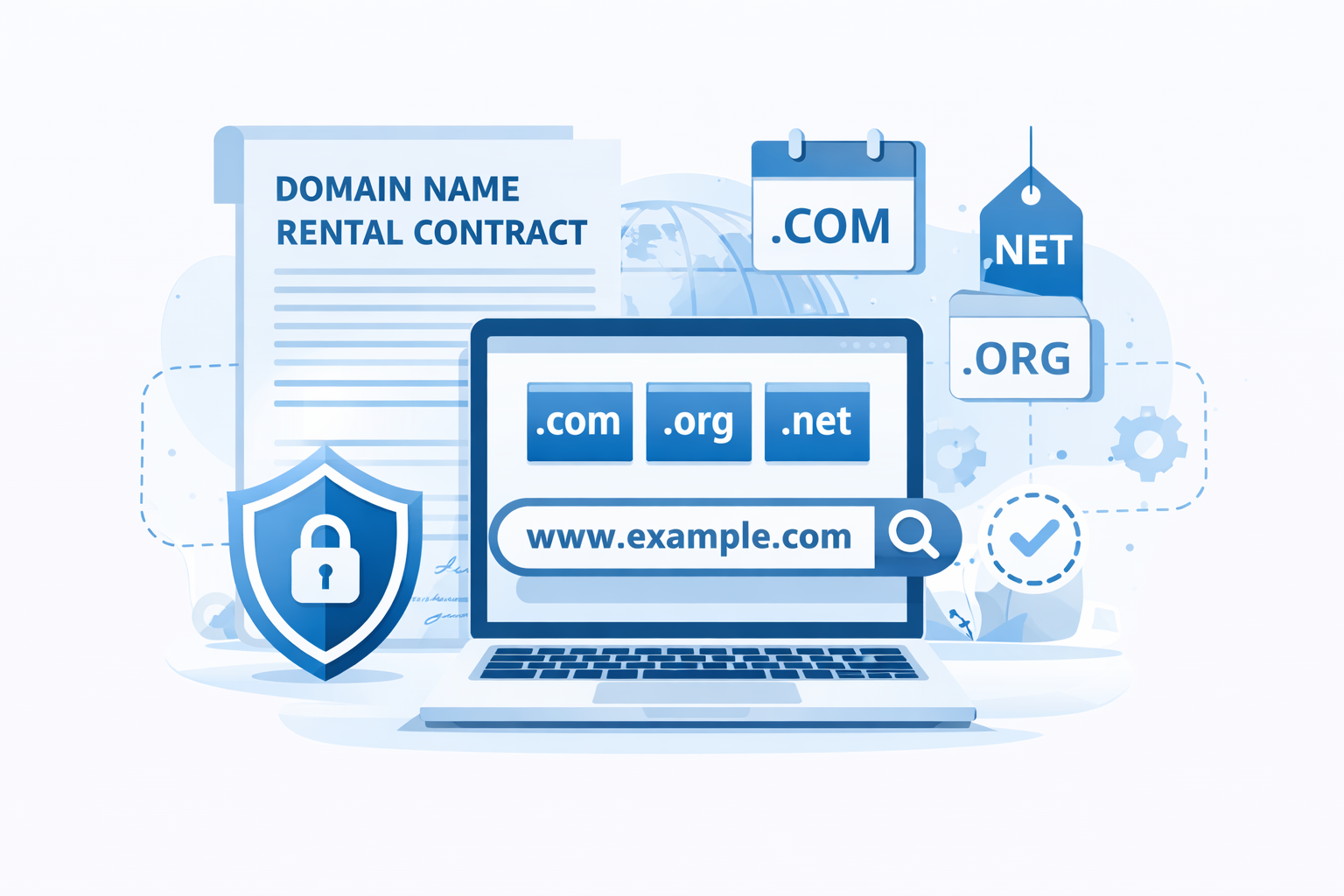
A domain name is a website’s unique address on the internet. It is what users type into a browser to access a website, such as example.com, google.com, or rentdomains.com. Domain names replace numeric IP addresses, like 192.168.1.1, which are difficult to remember, serving as a digital address that allows visitors to find your website quickly.
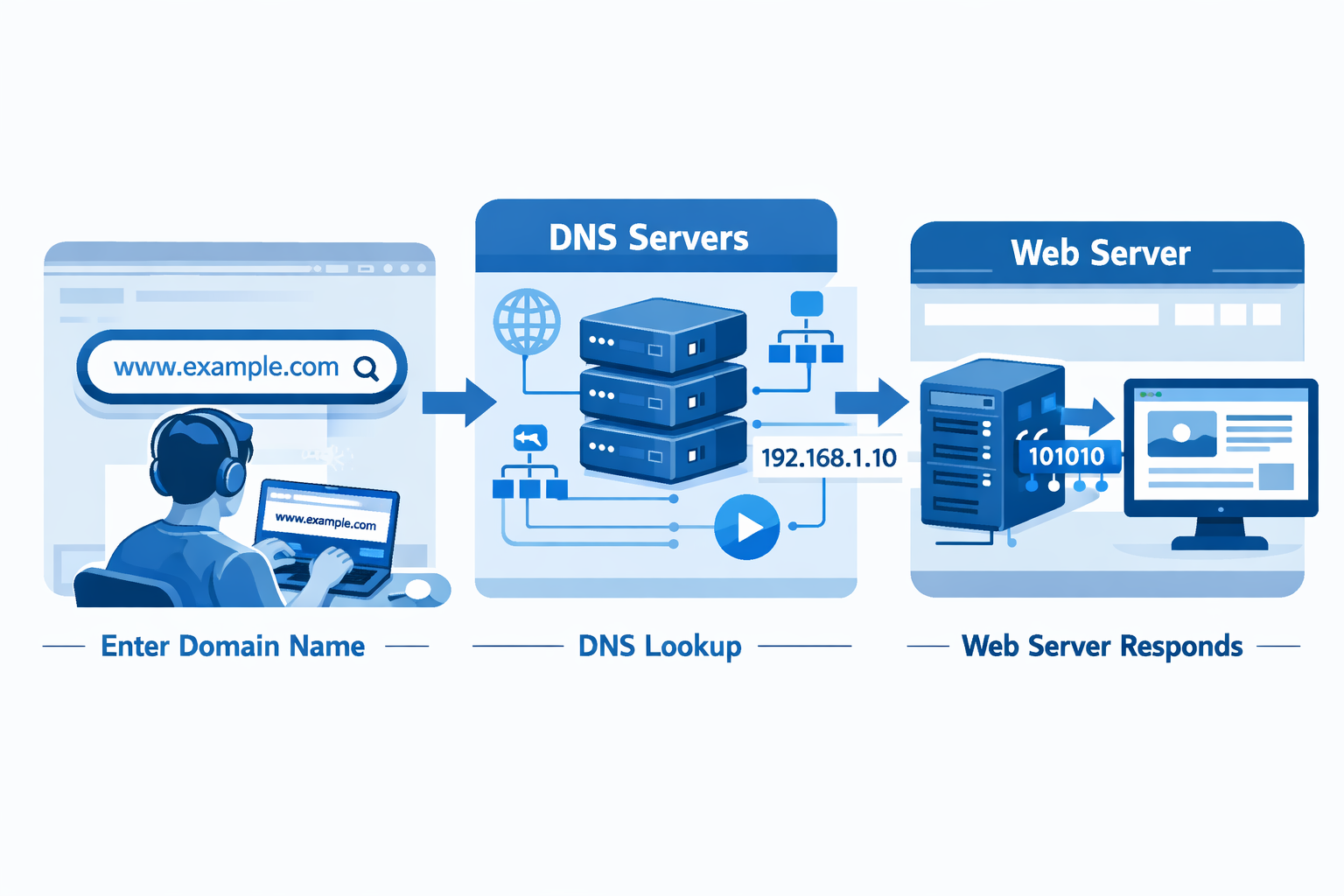
When a user enters a domain in a browser, the process works like this:
The browser checks the local DNS cache for a known IP address.
If not cached, the browser contacts DNS servers, which translate the domain into the server’s IP address.
The browser sends a request to the web server, which delivers the website files (HTML, CSS, images, scripts).
In milliseconds, the website appears fully to the user.
This system ensures that browsing the internet is fast and secure without memorizing complex IPs.
A domain name has two main parts:
Domain name – the custom part, e.g., google or rentdomains.
Top-Level Domain (TLD) – such as .com, .ro, .net, or .eu.
Example: rentdomains.com
name: rentdomains
TLD: .com
The TLD can indicate geographic location or business type, enhancing branding and SEO.
A common misconception is confusing a domain with hosting:
Domain → website address, how visitors reach the site
Hosting → storage for the website files
Without a domain, users cannot find the site; without hosting, the domain cannot display anything.
A well-chosen domain:
Builds trust and professionalism
Is easy to remember and pronounce
Supports branding
Influences SEO and organic traffic
Short, clear, and relevant domain names are more memorable and appealing to customers.
Some domains have higher value due to length, clarity, or relevance. Instead of buying expensive domains, you can opt for domain rental, which is ideal for:
startups
temporary marketing campaigns
testing a business idea
Renting provides quick, flexible access without large initial investments.
A domain name is not just a digital address; it is the foundation of your online presence. Choosing the right one impacts visibility, branding, and long-term business success. Understanding how it works and its structure allows you to make informed, strategic decisions for your website.